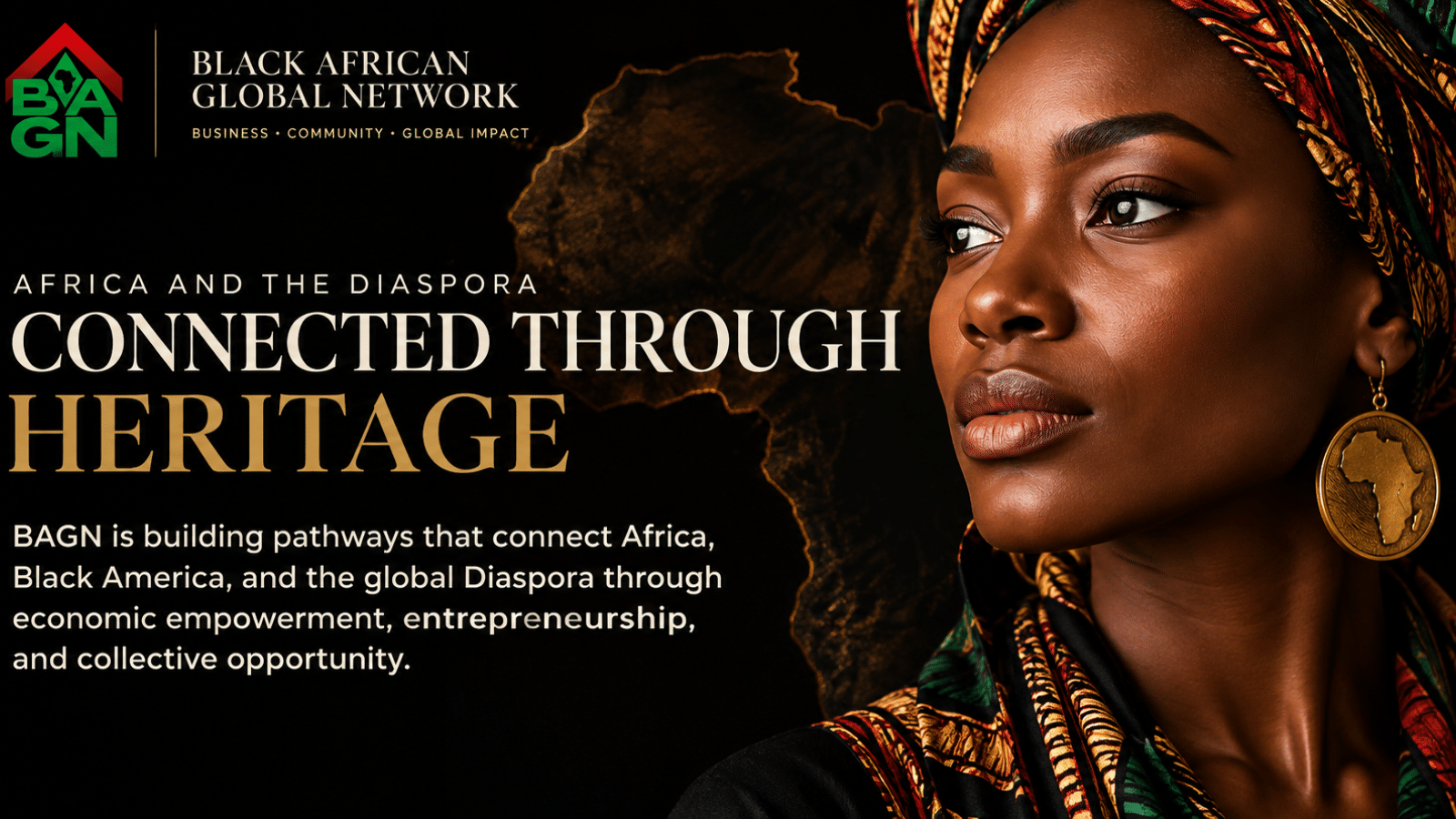
Black African Global Network

Pan-African Economic Development

OUR MISSION

THE FUTURE WE DESERVE IS THE FUTURE WE CREATE.

The future of Africa, Black America, and the global Diaspora will not be defined by hope alone. It will be shaped by what we choose to build together.
 
We possess extraordinary talent, knowledge, creativity, and resources. Our greatest opportunity is to unite those strengths with purpose and action. Through education, entrepreneurship, ownership, and political and economic empowerment, we can turn potential into progress and build a future defined by opportunity.
 
We are not waiting for circumstances to change before we act. We are connecting people, strengthening businesses, and creating pathways to greater economic independence. Every decision we make today can open doors for those who follow.
 
We are not waiting for opportunity. We are creating it.

Our mission is bigger than one person, one business, one community, or one generation.

Imagine what becomes possible when we measure our future by what we have the power to create, not simply by the challenges we have faced. Our mission is to turn potential into power, knowledge into action, and opportunity into generational wealth.
 
Across Africa, Black America, and the global Diaspora, the talent, resources, and determination already exist. Our responsibility is to connect those strengths across borders and create opportunities that no individual, business, or community could achieve alone.
 
We are building toward a future where our children inherit more than the struggles of the past. They inherit ownership, knowledge, resources, and opportunities to shape their own lives.
 
The future will not change simply because we believe it should. It changes when we decide to act together.

BY US. FOR US. ALL OF US. 

Our ancestors were separated by oceans, borders, and systems meant to divide us. Yet, separation did not erase our connection, and oppression did not diminish our potential. Across Africa, Black America, the Caribbean, and the global Diaspora, we inherit generations of strength, creativity, and determination. Our history is not only about endurance; it demonstrates our power to overcome and create.

Consider what we can achieve by turning shared strength into collective action. Picture African businesses reaching customers across the Diaspora, Black American entrepreneurs forming global partnerships, and young people accessing new opportunities. When our knowledge, resources, and investments work together, we create ownership, economic independence, and generational wealth. The potential exists; our responsibility is to connect, develop, and apply it.

We do not need to live in the same country to build a shared future. What we need is a common purpose and the determination to act. Our heritage connects us, but our decisions shape our future. Every business, partnership, and opportunity we create can strengthen generations to come. The question is not if we have the power to build something extraordinary, but whether we are ready to use it.
Pan-Africanism connects us through shared history, heritage, and vision. However, unity is only the beginning. Real progress depends on understanding the forces shaping our lives. Across Africa, Black America, the Caribbean, and the global Diaspora, our communities hold extraordinary potential. Lasting progress requires political knowledge, civic participation, and accountable leadership.

Consider the future we want: thriving businesses, strong communities, quality education, economic opportunity, and lasting prosperity. Who makes the laws affecting our businesses? Who allocates public funds? Who shapes education, housing, infrastructure, trade, and resource access? These decisions are made daily, regardless of our awareness. Knowledge empowers us to participate rather than remain on the sidelines.

Political power is essential to Pan-African progress. We can build cross-border businesses, form international partnerships, and strengthen economic ties. However, government policies, regulations, and trade agreements can either expand or restrict these opportunities. Understanding these systems enables us to identify opportunities, challenge barriers through civic action, demand accountability, and strengthen cooperation between Africa and the Diaspora. We cannot shape systems we do not understand.

Political power extends beyond elections. It starts with knowledge and grows through participation. It involves understanding our representatives, government operations, resource allocation, and decision-making processes. Local decisions can impact our lives as much as national policies. Global political and economic developments also affect our communities through trade, investment, and shared interests. An informed community is better prepared to protect its interests, seize opportunities, and hold leaders accountable.

Our heritage connects us. Political knowledge equips us. Collective action creates possibilities. By combining Pan-African unity with economic cooperation, civic education, informed participation, and accountable leadership, we build a foundation for lasting progress. Achieving the future we want requires more than recognizing our potential; it demands understanding our power, accepting responsibility, and applying our knowledge.
Economic power starts with recognizing the value we already create and choosing to build greater ownership of it. Across Africa, Black America, the Caribbean, and the global Diaspora, we are entrepreneurs, innovators, professionals, producers, creators, and consumers. Our labor drives industries, our creativity shapes global markets, and our purchases support businesses worldwide. The question is not if we contribute to the global economy—we already do. The question is how we convert those contributions into ownership, economic independence, and generational wealth.

Consider the impact of every dollar you spend. Who owns the business? Who produces the goods? Who controls distribution and profits, and where are those profits invested? Every purchase is part of a larger economic system. When our businesses support each other, develop supply chains, create jobs, and reinvest locally, we expand opportunities for ownership and growth. Economic power is not just about earning or spending; it is about ownership, building, and influencing the wealth our work generates.

Imagine the possibilities when Pan-African unity leads to economic cooperation. African farmers and manufacturers could connect directly with Diaspora buyers. Black American businesses could form trade partnerships across continents. Caribbean entrepreneurs could access new markets, and young innovators could reach resources once out of reach. Political knowledge clarifies the laws and policies shaping these opportunities. Economic cooperation transforms relationships into thriving enterprises, international trade, investment, and lasting institutions. Our connections can become pathways to shared prosperity.

Economic independence requires more than purchasing decisions. It is built through ownership, education, production, investment, and strategic partnerships. This involves developing skills, strengthening businesses, expanding market access, and creating systems where entrepreneurs and communities share in the value they generate. Fair partnerships based on transparency, respect, and mutual benefit are essential. We must move from merely participating in economic systems to building, owning, and influencing the institutions shaping our economic future.

We already have the talent, contribute the labor, and create the value. Imagine what we can achieve by connecting these strengths with intention and action. Every business established, partnership strengthened, entrepreneur supported, and opportunity created contributes to a more prosperous future. Generational wealth is built by creating opportunity, expanding ownership, and making decisions today that strengthen future generations.
Every successful business starts with a decision to act on an idea. You may see a problem to solve or have a skill, product, or vision that could change your family’s future. The difference between an idea and a business is action. Too many talented people have the creativity and determination to become entrepreneurs but lack access to the knowledge, resources, and guidance needed to advance. Limited opportunity should not be mistaken for lack of ability.

Imagine the possibilities when we connect the entrepreneurial strengths of Africa, Black America, the Caribbean, and the global Diaspora. Someone in Philadelphia could partner with a supplier in South Africa. A designer in Kenya could reach customers in the Caribbean. Experienced entrepreneurs could share lessons with those launching their first businesses. Distance does not have to limit our success. When knowledge, resources, markets, and relationships connect across borders, opportunity expands beyond what any single community can achieve alone.

Entrepreneurship is more than opening a business; it is about building something that works, grows, and endures. It requires understanding customers, developing products and services, managing finances, establishing operations, reaching markets, and making informed decisions. Resilience is essential—the willingness to learn from mistakes, adapt to change, and persist through challenges. You do not need to know everything before starting, but you must be willing to learn, take responsibility, and apply that knowledge. Business education and opportunity should not be reserved for those with existing wealth or connections.

Entrepreneurship is a powerful expression of Pan-Africanism and economic empowerment. Each business we build can create opportunities beyond its founder by supporting suppliers, employing workers, serving communities, developing partnerships, and opening doors for other entrepreneurs. Connecting businesses across Africa and the Diaspora strengthens commercial relationships and fosters investment, innovation, and trade. Our success is most meaningful when it enables others to succeed. Entrepreneurship is not only about individual achievement but also about what we can accomplish together.

Your starting point does not define your destination. You may begin with only an idea, limited resources, and many questions. What matters is your willingness to learn, plan, act, and adapt. Through entrepreneurship education, business development, meaningful connections, and marketplace opportunities, BAGN helps transform ideas into enterprises and enterprises into lasting institutions. The future belongs to those who prepare for opportunity, act with purpose, and build beyond themselves.
Starting a business takes courage. Building a business that grows, competes, and endures requires vision, strategy, knowledge, and consistent action. Across Africa, Black America, the Caribbean, and the global Diaspora, entrepreneurs are creating extraordinary products, delivering valuable services, and developing innovative solutions. However, talent and determination alone do not guarantee business success. The difference between having a business and building a thriving enterprise often comes down to the systems we create, the decisions we make, and the opportunities we are prepared to pursue. Business development is about transforming potential into measurable progress and building enterprises capable of creating lasting value.

Consider the possibilities when our businesses connect their strengths across borders instead of operating in isolation. An established Black American business could partner with an African manufacturer. A Caribbean entrepreneur might access new distribution channels, or a South African business could leverage professional expertise to improve operations and expand internationally. These opportunities extend beyond any single market, community, or country. By exchanging knowledge, forming strategic partnerships, strengthening supply chains, and identifying new customers, businesses unlock opportunities that may have previously been out of reach. Growth begins when we recognize collaboration as a key competitive advantage.

Business development requires more than ambition. It demands understanding what drives enterprise success and the discipline to strengthen it. This includes evaluating business models, managing finances, improving operations, developing marketing strategies, understanding customers, building effective teams, and establishing systems for sustainable growth. It also involves pricing products and services profitably, identifying risks, accessing resources, and making informed decisions. A business cannot reach its potential if the owner is always reacting to problems instead of building systems to prevent them. The goal is not just to work harder, but to develop the knowledge, structure, and strategy needed to work more effectively and create opportunities for expansion.

Business development is a powerful driver of Pan-African economic empowerment. Stronger businesses create employment, foster innovation, and enable production, trade, and investment. Entrepreneurs with access to business education, professional guidance, commercial relationships, and new markets are better positioned to build sustainable enterprises. When these enterprises connect across Africa and the Diaspora, they strengthen each other through sourcing, partnerships, technology, and shared expertise. Economic independence requires more than starting businesses; it requires developing enterprises that can grow, compete, retain ownership, and build wealth. Every strengthened enterprise can open doors for other entrepreneurs, suppliers, workers, and communities.

Your business is not limited to where it began, and current challenges do not have to define its future. Whether you are improving operations, reaching new customers, developing international partnerships, or preparing for growth, progress starts with evaluating your position and taking purposeful action. Through business education, professional connections, strategic collaboration, and marketplace opportunities, BAGN supports entrepreneurs and established business owners in building stronger enterprises. Our goal is not just survival, but to develop the knowledge, relationships, and economic foundations that help businesses thrive for generations.
What kind of community do you want future generations to inherit? Imagine neighborhoods where children are safe, families access quality education and healthcare, businesses thrive, and young people believe their possibilities are limitless. Imagine communities where elders are respected, talent is developed, and opportunity is not limited by ZIP code. Strong communities are built by those who recognize the need for change, accept responsibility, and work together. The question is not whether we deserve stronger communities, but what we are prepared to build to create them.

Across Africa, Black America, the Caribbean, and the global Diaspora, we possess generations of knowledge, achievement, resilience, and innovation. Yet much of our history remains untaught, misunderstood, or reduced to ancestral suffering. Our story did not begin with enslavement and cannot be defined by colonization. African civilizations contributed to human knowledge, culture, commerce, and innovation long before these systems existed. Understanding our full history allows us to challenge imposed limits and those we may have accepted ourselves. Historical education is not just about our origins; it is about understanding who we are and what we can become.

Now imagine turning that knowledge into action. Picture young people learning about African civilizations and modern innovation, families discovering connections across the Diaspora, entrepreneurs mentoring the next generation, and communities sharing proven solutions. Community initiatives unite people through historical education, cultural awareness, youth development, mentorship, financial literacy, health education, workforce training, and business resources. However, meaningful development requires more than externally created programs. It requires communities to set their own priorities, develop leadership, and participate in decisions shaping their future. Empowerment begins when people see themselves as architects of change, not just recipients.

Community development is inseparable from Pan-Africanism, political knowledge, and economic power. History shows how institutions and policies have shaped our communities. Civic education reveals who makes decisions and how public resources are allocated. Entrepreneurship creates pathways to ownership, employment, and economic independence. Cooperation across Africa and the Diaspora enables knowledge exchange, stronger relationships, and opportunities beyond borders. When education, leadership, economic development, and community participation align, we build institutions that serve generations.

Our history is a foundation, not a limitation. Our knowledge gains power when we apply it. We are building on generations of achievement, resistance, creativity, and determination. Every young person educated, entrepreneur supported, relationship strengthened, and community solution developed contributes to a future that need not repeat past struggles. The future of our communities depends not only on what we remember, but on what we learn, build, and choose to do together.
Imagine the possibilities when Africa, Black America, the Caribbean, and the global Diaspora connect their economic power with purpose. Every day, our communities add significant value to the global economy through labor, creativity, businesses, resources, and purchasing decisions. Yet a key question remains: How much of that value creates lasting opportunities for the people and communities who generate it? Our World Nexus was founded on a clear vision: connect our businesses, expand our markets, strengthen ownership, and turn economic participation into lasting prosperity.

Consider the impact of a marketplace that unites our businesses across borders. An African manufacturer could reach customers in Black America. A Caribbean entrepreneur could introduce authentic products to buyers throughout the Diaspora. Black American businesses could discover new suppliers, develop partnerships, and expand beyond traditional markets. These connections are more than transactions; they are opportunities to build businesses, create employment, strengthen supply chains, and develop relationships that transform economic futures. Geography should not limit our opportunities when we have the vision and determination to connect.

Our World Nexus is more than a marketplace for buying and selling products. It is built on the principles of ownership, entrepreneurship, cultural connection, and economic cooperation. Consumers who support businesses within our global network can make purchasing decisions that reflect their values. Entrepreneurs who access new customers and markets gain greater opportunities to grow, innovate, and strengthen their enterprises. The goal is not just to increase consumption, but to expand what we produce, own, and build together.

Our World Nexus directly supports the mission of Black African Global Network. Pan-Africanism is the foundation for our shared purpose. Entrepreneurship develops businesses that create value. Business development strengthens their ability to compete and grow. Cultural commerce connects our heritage to economic opportunity. Professional services provide expertise, and economic cooperation creates pathways for trade, investment, and stronger commercial relationships. Our World Nexus brings these principles into a consumer marketplace where connections become opportunities and opportunities drive economic progress. We are not just discussing economic

We already have the creativity, talent, businesses, resources, and determination. Now imagine what we can achieve by connecting them through a shared economic vision. Every new business relationship, opportunity for entrepreneurship, and decision to support sustainable growth contributes to something greater than a single transaction. The future of our economy is shaped not just by what we spend, but by what we own, create, and the institutions we build. Our World Nexus offers an opportunity to turn that vision into action and help build prosperity that spans borders and generations.
Our influence is global. Imagine the impact if we transform more of that influence into ownership and economic power. Across Africa, Black America, the Caribbean, and the global Diaspora, our music, fashion, art, literature, food, and creative traditions drive economic value worldwide. Our creativity has shaped the world. The key question is whether we are building the businesses, institutions, and opportunities that enable our communities to fully benefit from what we create.

Consider the power behind the culture you experience daily. Who designs the clothing, creates the artwork, owns the businesses, controls intellectual property, shapes cultural representation, and receives the profits? Cultural influence is not the same as ownership. Recognition does not guarantee economic independence. Understanding who creates, controls, and benefits from value is essential for a stronger economic future. Our creativity deserves more than applause; it deserves ownership, fair compensation, and lasting prosperity.

Now imagine connecting our cultural creativity directly to global economic opportunity. Picture African artisans reaching customers across the Diaspora, Caribbean designers forming international partnerships, and Black American creators expanding their businesses while retaining control. Cultural enterprises can share authentic products, knowledge, and traditions with customers who value their origins. These are opportunities not just to sell products, but to build enterprises, preserve heritage, create employment, expand markets, and strengthen economic relationships across borders. Our cultural connections can become powerful pathways to entrepreneurship, trade, and collective prosperity.

Cultural commerce is a powerful expression of Pan-Africanism and economic empowerment. Shared heritage connects us, but responsible business practices turn those connections into meaningful economic relationships. Ownership, intellectual property protection, fair compensation, transparent partnerships, and ethical trade enable creators and entrepreneurs to benefit from the value they generate. Our culture should not be an unlimited resource for others to exploit while its creators are denied opportunity. We can build relationships that respect authenticity, protect creative contributions, and create mutual benefits for businesses and communities across Africa and the Diaspora.

Our culture is more than something the world admires; it is part of our history, identity, knowledge, and economic potential. Supporting authentic cultural enterprises, empowering creators with ownership, and building cross-border partnerships all strengthen that potential. We have shown our power to influence the world. Now we have the opportunity to expand our power to own, build, and benefit from what we create. When cultural pride leads to economic cooperation and ownership, we transform creative influence into lasting institutions, stronger communities, and generational wealth.
Consider all you have learned, every challenge overcome, and every skill developed. How far could your knowledge reach if connected with the right opportunities? Whether you are an educator, accountant, architect, healthcare professional, technology specialist, consultant, designer, or skilled tradesperson, your expertise has value. Decades of experience can help others start businesses, solve problems, strengthen organizations, or achieve what once seemed impossible. Your experience is a resource for others to accomplish more. Across Africa, Black America, the Caribbean, and the global Diaspora, geography should not limit the impact of our professional knowledge.

Consider the possibilities when we connect expertise across borders. Picture a business owner in Ghana working with an accountant in Philadelphia, or an entrepreneur in Jamaica receiving technical guidance from a professional in Kenya. Imagine educators in Black America collaborating with African institutions to expand learning opportunities. Talented professionals already contribute to organizations worldwide. Our opportunity is to strengthen these connections, transform expertise into partnerships, and open new markets for professional services. When knowledge crosses borders, opportunity follows.

Professional excellence goes beyond completing tasks. It means creating solutions, delivering value, earning trust, and achieving results. Whether your expertise is in consulting, finance, technology, education, healthcare, engineering, law, marketing, or the creative industries, your work supports business growth and community prosperity. Lasting success also requires professional responsibility. Qualifications, licensing, ethical standards, accountability, and respect for local regulations are essential, especially when services cross borders. True professional strength comes from combining expertise with integrity.

Professional services drive Pan-African economic development. Businesses need professionals to solve problems, improve operations, and support growth. Aspiring entrepreneurs benefit from guidance, and young people need mentors to develop their abilities and discover new opportunities. Institutions gain when specialized knowledge addresses real challenges. Building professional networks across Africa and the Diaspora does more than share information; it creates pathways for entrepreneurship, innovation, business development, employment, and stronger institutions. Our expertise gains value when it advances collective progress.

Your knowledge is an asset, and your experience has value. Your abilities can open doors beyond your immediate community. The key question is not just what you have achieved, but what becomes possible when you apply your expertise to a greater purpose. By connecting our skills, building trusted partnerships, supporting each other’s businesses, and expanding opportunities across borders, we lay the groundwork for economic independence and generational prosperity. Pan-Africanism is not only about our shared history and culture; it is about the remarkable future we can create by uniting our knowledge, talent, and determination through purposeful action.

Outside Of America: View BAGN Africa

BLACK AFRICAN GLOBAL NETWORK

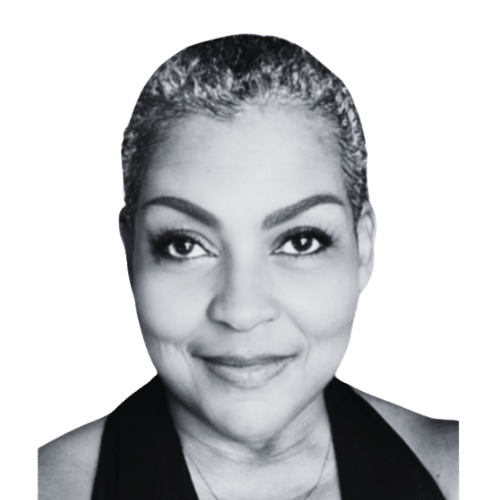
About the Founder

Building Connections. Creating Opportunities. Strengthening Generations.

Great movements begin when someone recognizes what is possible and refuses to accept the status quo. Black African Global Network (BAGN) was founded on one unwavering belief: Africa, Black America, and the global Diaspora already possess exceptional knowledge, talent, creativity, and resources. Our opportunity is not to discover our potential, but to unite, develop, and transform it into lasting economic and political power.
 
With decades of experience in psychology, behavioral health, entrepreneurship, business leadership, and organizational development, BAGN’s founder understands that lasting transformation requires more than vision. It demands knowledge, strategy, determination, and the courage to act. This experience, from developing people and organizations to launching businesses and turning ideas into reality, has reinforced one fundamental truth: Our circumstances do not define our possibilities.
 
BAGN was created to turn that conviction into collective action by connecting entrepreneurs, professionals, businesses, and communities across borders to expand ownership, strengthen economic independence, and create opportunities that extend beyond a single generation. This is more than building a network; it is about building a future where our collective strengths drive our collective success.
 
We have the talent, the knowledge, and the power. The question is what we are prepared to build together.

OUR FUTURE IS BUILT TOGETHER.

Whether you're an entrepreneur, business owner, professional, or community advocate, there is a place for you in building stronger connections across Africa, Black America, and the global Diaspora.

Black African Global Network

JOIN THE MOVEMENT

  • Entrepreneurial Hub

FOLLOW US ON SOCIAL MEDIA

© 2026 Black African Global Network LLC, its affiliates, brands, and subsidiaries. All rights reserved.